logo

https://www.mbabar.org/

Latest News

Latest News


219 Posts found
Previous • Page 12 of 22 • Next
Posted on: Jan 29, 2020

The Free Federal Law Clinic is a volunteer lawyer program run by the Oregon Chapter of the Federal Bar Association (FBA). The program began as a pilot project in January 2019 to increase the participation of attorneys in federal pro bono service, and to assist pro se litigants. The clinic offers direct client consulting experience with federal issues in a limited representation capacity, requires a short time commitment, and grants volunteers the ability to develop attorney-client relationships after the consultation if they so desire. Volunteers frequently answer procedural questions, and gain exposure to substantive areas like employment and social security.

The clinic begins with the pro se litigant completing intake forms online, which consist of 10 short questions. Once conflict checked, specific case information is sent to the volunteer attorney for review. The clinic maintains a list of volunteers to take consultations on alternating Thursdays on an ongoing basis. Volunteers meet with the pro se litigant in an attorney conference room at the Mark O. Hatfield US Courthouse. If mobility is an issue, volunteers may also facilitate a phone appointment with the pro se litigant. A consultation typically lasts 30 minutes.

The clinic’s ideal volunteers are attorneys who have a fair amount of experience in federal court and are well-versed in federal civil procedure. However, newer attorneys who want more experience with federal issues are welcome and may be paired up with a more experienced attorney during their first volunteer consultation upon request. If you are not a member of the Federal Bar, the Oregon Chapter of the FBA offers a Pro Bono Scholarship for attorneys interested in providing pro bono services through the US District Court for the District of Oregon’s Pro Bono Program.

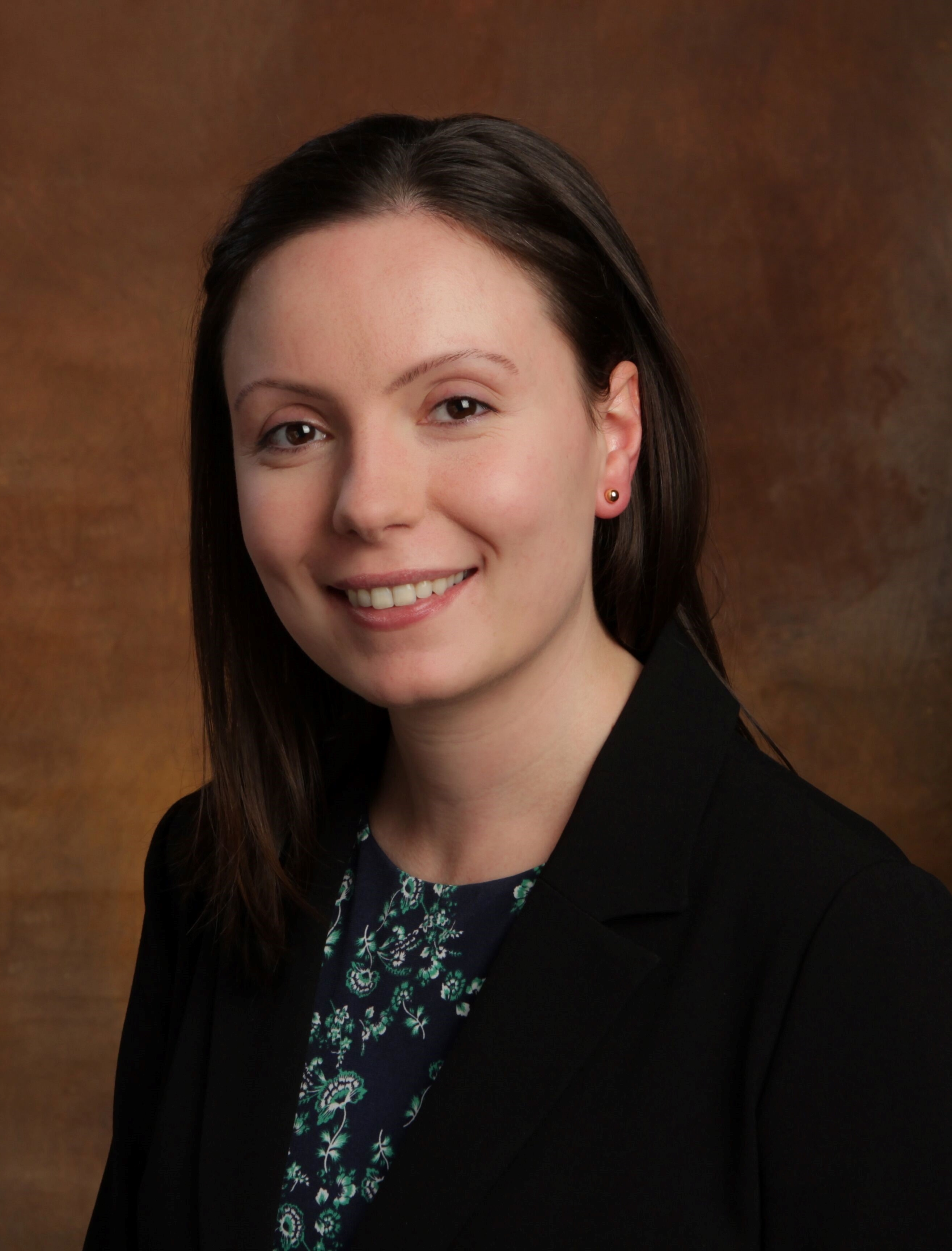
Susan D. Pitchford, a partner at Chernoff Vilhauer LLP, is an active member of the Federal Bar Association and one of the main coordinators of the Free Federal Law Clinic. Having served as Oregon Chapter President from May 2011 to May 2012, and on the executive team of the National FBA Litigation Section Board, Susan is committed to serving her community. Early in her life, Susan recognized the frustration and difficulty many people experience navigating convoluted benefit systems when her younger sisters transitioned from receiving special education services as children to requiring services as young adults. Since that time, Susan has remained dedicated to volunteering and has found that it provides meaning to her work by making a significant impact on people’s lives. She also believes that volunteering helps attorneys build confidence in handling unfamiliar legal issues.

Thank you for your service, Susan.

If you are interested in gaining experience in federal law, the Oregon Chapter of the FBA is planning a CLE seminar in early 2020 which will cover federal civil procedure and substantive areas of law that tend to come up most frequently. Potential and current volunteers are strongly encouraged to attend.

To learn more about getting involved or applying for the FBA Pro Bono Scholarship, please visit the Oregon Federal Bar Association’s website at oregonfederalbarassociation.org/ federal-law-clinic/. Volunteers may sign up for available consultation slots posted online at bit.ly/volunteerFBA.

Posted on: Jan 23, 2020

After 22 years on the bench, Judge Steven Todd retired from the Oregon Judicial Department on December 31, 2019. His retirement marks the end of a judicial career celebrated for its mentorship, professionalism, and commitment to improving traffic safety.

Judge Todd graduated from Northwestern University in 1978 with degrees in music and political science, two poles that have guided him throughout his life. A native of Beaverton, Oregon, he returned home and attended Lewis & Clark Law School, graduating in 1981. Prior to taking the bench in 1997, Judge Todd spent two years clerking in both federal and state court. From 1983 to 1997 he worked as a district attorney, first in Columbia County and then Multnomah County.

Judge Todd was one of approximately a dozen judges who heard traffic matters in Multnomah County. He also handled criminal matters (DUII), probation violations, landlord tenant cases, and small claims. Following the events of September 11, 2001, Judge Todd struggled with the meaning of his work and whether it was important. These doubts were brought into stark relief when shortly thereafter, he was the first to the scene of an accident with significant injuries. Witnessing this event firsthand reminded him of the profound effect traffic accidents have on individuals and communities. Thereafter, Judge Todd began to conceive of ways his role on the bench could improve traffic safety for Oregonians. For example, he began to emphasize traffic safety classes as integral aspects of sentences. In addition, he made extraordinary efforts to get out into the community. He participated in safety coalitions organized by the City of Portland, he was a member of the Oregon Employers for Traffic Safety Advisory Committee, and presented at classes that targeted young drivers and their parents such as the Legacy Emmanuel Trauma Nurses Talk Tough Program.

Despite all his community involvement, Judge Todd still found time to mentor new judges and has made significant contributions to streamlining various aspects of court operations. Presiding Judge Stephen Bushong greatly appreciates all the efforts Judge Todd has made in making himself accessible. “He has provided bench guides, helpful tips, forms, and other materials to referees, judges and staff. He regularly participates in judges’ meetings and programs, bringing a wealth of knowledge and experience to the table. Most new judges in this county have sat alongside Judge Todd as they learn how to handle arraignments, traffic court, small claims court, or other important dockets.”

When asked if there was any advice he would offer to those just starting out in their career, he encouraged individuals to get involved in organizations that provide opportunities to interact with judges and colleagues face to face. He has found that his career has been profoundly enriched from all the connections he has made by getting out of the office and involved in the community. 

Judge Todd will continue to serve as a municipal court judge around the state. He is excited to continue to use his knowledge to be of service to communities in need of his expertise. He looks forward to spending time with his wife, who recently retired and launched a second career as a seamstress and piano teacher. Judge Todd plays trombone and electric bass in various bands in the Portland area and plans to spend more time on these musical endeavors. In the immediate future, Judge Todd is looking forward to his daughter’s wedding and tackling some projects around the house. His son, also a musician, lives in the area and Judge Todd enjoys hearing him perform both the violin and musical scores.

As put best by Judge Bushong: “Judge Todd has had a significant positive impact on the bench, bar, and most importantly, the people of Oregon. He will be missed.” That is undoubtedly a sentiment shared by many.

Posted on: Jan 16, 2020

In March 2019, Governor Kate Brown appointed Amy M. Baggio to the Multnomah County Circuit Court. Baggio, and Heidi Moawad, filled vacancies created by the retirements of Judges Marilyn E. Litzenberger and John A. Wittmayer.

Amy Baggio was born in Pittsburgh, Pennsylvania, into what she describes as “incredibly lucky” circumstances. She was the middle child of three in a “rather strict Catholic family.” Her father worked in human resources with a large company and her mother was active in their neighborhood schools, church, and a variety of charitable organizations, including Ronald McDonald House Charities and Meals on Wheels. Judge Baggio graduated high school in Alabama and went on to Wake Forest University where she graduated in 1995, cum laude, with a BA in Speech Communication and a minor in French. After graduation, she stayed in Winston- Salem and worked for a marketing and advertising firm for three years. There, she met and worked alongside local elected officials and attorneys hired to advance several campaigns. Seeing their resolve to impact social issues inspired her to apply to law school.

Judge Baggio went to Lewis & Clark Law School for its environmental law program. However, by the time she graduated law school, her focus had shifted: a clerkship at the Federal Public Defender’s (FPD’s) office in Portland allowed her to watch amazing lawyers and staff work tirelessly in their representation of indigent criminal defendants. This experience convinced her that she, too, wanted to be a criminal defense lawyer and work with underserved citizens in our community. After law school she joined the Metropolitan Public Defender’s (MPD) office in Portland. There, she began to develop her particular style and approach to criminal law practice. She saw her role as broader than the often-challenging work of spotting legal issues and guiding her clients through the criminal charges they faced. She went beyond, engaging with her clients and their families to achieve a result that allowed them the opportunity to address underlying issues that led to their involvement in the criminal justice system.

After one year at the MPD, Judge Baggio returned to the FPD’s office where she worked from 2002 to 2013 for then-Federal Public Defender Steve Wax. While there, she represented hundreds of clients. One of her clients, who she represented along with Assistant Federal Public Defender Ruben L. Iniquez, was Nazar Chaman Gul, imprisoned at Guantanamo Bay Prison since 2003. Gul had worked as a guard for the Karzai government in the town of Gardez. One night, as he slept in a house belonging to a man rumored to be in cahoots with the Taliban, Gul was swept up by US soldiers under the cover of darkness and taken to Guantanamo via the Bagram Air Base. In 2008, the US Supreme Court issued its decision in Boumediene v. Bush, holding that held detainees at Guantanamo had a right to file petitions for habeas corpus. Mr. Gul filed a pro se petition for habeas review of his detention at the US military base in Cuba. Iniguez and Baggio were then appointed to represent Gul in his case filed in the DC District Court.

Iniguez and Baggio and their team investigated the government’s allegations against Gul and learned the details of his life and the circumstances under which he was in Gardez and captured. Eventually, they came to understand that he had likely been confused for Chaman Gul, a known warlord, who was also imprisoned at Guantanamo. In 2007, the government allowed Mr. Gul to leave Guantanamo. Afterwards, Baggio’s co-counsel Iniguez told the press, “Every single, minor detail he told us was corroborated. They (US officials) never took the time or effort to find it out... All it would have taken was a phone call.” Judge Baggio received awards from the ACLU of Oregon and American Jewish Committee for her work representing Gul. The work had lifelong impacts on her as a person and as a lawyer. These articles describe the exhaustive investigative and legal work necessary to secure Nazar Gul’s release: www.bit.ly/NazarGul1 and www.bit.ly/NazarGul2.

Judge Baggio left the FPD’s office in 2013, to start a solo criminal defense practice. Longtime Portland criminal defense attorney Larry Matasar rented her an office in the American Bank Building, where she initially worked in a suite alongside Matasar, Dennis Balske, Stephen Brischetto, James Lange, Richard Maizels, and author Phillip Margolin, all of whom provided a wide array of expertise and a collegial environment. Mr. Matasar served as a mentor in private practice and was her sounding board for ideas. She continued to represent a wide variety of clients, and she remained committed to not only to defending her clients against criminal charges but continuing to advocate for them in such a way as to provide support should they be ready to move beyond their pasts and on to more stable lives. She is inspired by the cards and letters she receives from former clients who have found the strength and courage to overcome some of life’s most seemingly insurmountable obstacles. And, while she had the opportunity to be involved in high profile cases, such as the Malheur occupation trial where she represented Joseph O’Shaughnessy, Judge Baggio talks most passionately about the individuals who overcame experiences of abuse, neglect, and addiction to become inspirations to everyone whose lives they touch.

And, as mentioned above, Judge Baggio carried into her private practice principles she embraced from her experience representing Nazar Gul. His case reinforced her belief that the rule of law – including the fundamental rights guaranteed by our Constitution - are essential in the functioning of our justice system and in maintaining our very democracy. The government gains no benefit from failing to abide by our constitutional guarantees; to the contrary, when the government fails to follow its own laws, it sends a message to the citizenry that they need not respect the law either.

Judge Baggio’s core belief in the importance of the rule of law and the protection of basic rights grounds her work as a judge. Judge Baggio strives to create, on a daily basis, a calm environment where she resolves legal disputes in an understandable and respectful manner. While legal cases almost always result in one side prevailing over the other, Judge Baggio believes it of the utmost importance for the litigants appearing before her to leave the courthouse feeling that she listened carefully to them and that while they may not agree with her decision, they understand why she ruled the way that she did.

Judge Baggio appreciates and expects civility and preparedness from those who appear before her. Driven by the passion to understand the law and reach the right result, she reads everything before hearing cases. To allow time for her careful review she encourages attorneys to submit briefings as early as possible.

Judge Baggio took the bench in April 2019 as a general assignment judge and hears both criminal and civil matters. She has already conducted many criminal trials and recently conducted her first civil trial in an employment discrimination case. She describes civil law as fascinating and looks forward to being assigned more civil trials and motions in the future.

Posted on: Jan 14, 2020

Presiding Judge’s Report and Courthouse Update Updates from Presiding Judge Stephen Bushong

Statewide Time-to-Disposition Standards
Oregon Chief Justice Martha Walters has asked the statewide Case Management Committee (chaired by Marion County Presiding Judge Tracy Prall) to help courts around the state meet the time-to-disposition standards adopted by the Oregon Judicial Department for all case types (criminal, civil, etc.). Currently, not all jurisdictions are meeting all of the standards. Courts have been asked to identify their “best practices” used to keep cases moving through the system in order to meet time-to-disposition standards. The Multnomah County Circuit Court is working on its report to the committee.

Time to disposition is measured from the initiating complaint filing to the entry of judgment that terminates a case. The standards establish goals for timely resolution of most cases, recognizing that there are sometimes good reasons for some cases to take much longer to resolve. For example, civil cases designated as “complex” will take longer to resolve, and the parties in some family law cases may benefit by taking longer to resolve the case.

The court utilizes a central docketing system, which allows the presiding judge to move hearings around so that judges will be available to conduct trials on the cases ready for trial. It has been several years since a case, otherwise ready for trial, has been set over because of judicial unavailability in this county. The presiding judge may decline a request to set over a trial date absent good cause in part to help the court meet the statewide time-to-disposition standards. In general, a request for more time to conduct discovery or engage in settlement negotiations will not be considered “good cause” to set over a trial date previously set by the court.

General Practice Tips and Reminders
If the court has appointed a Guardian ad Litem (GAL) or conservator to represent a minor or incapacitated person in a civil case and the parties settle the case, ORCP 27 I and ORS 126.725 require court approval of the settlement. Under Supplemental Local Rule (SLR) 9.055, the request for approval of the settlement must be presented to the probate court. Judge Patrick Henry currently oversees the probate court. Lawyers are reminded to obtain probate court approval when settling a case involving a GAL or conservator.

The Oregon Legislature adopted a new receivership law - codified in ORS Chapter 37 - in 2017. The statute includes an automatic stay provision - analogous to the automatic stay provided by federal bankruptcy law - prohibiting commencement or continuation of a variety of proceedings against the owner or property subject to the receivership, unless relief from stay is granted by the court. See ORS 37.220. Practitioners should keep this automatic stay provision in mind before attempting to pursue a claim after a receiver has been appointed.

Updates from Trial Court Administrator Barbara Marcille UTCR on Warrantless Civil Arrests
Oregon Chief Justice Walters approved a new UTCR prohibiting warrantless civil arrests in courthouses through the state. This rule was recommended by the UTCR Committee in October 2019. Several other jurisdictions across the country have implemented similar rules. Federal Immigration and Customs Enforcement (ICE) officials have generally respected those rules in other jurisdictions. According to recent media reports, however, federal officials have not agreed to abide by the new Oregon rule. The court is not aware of any instances of civil warrantless arrests in or around the courthouse since the rule took effect. If practitioners learn of civil arrests in violation of the rule, they are encouraged to report them to Trial Court Administrator Barb Marcille or to send an email to Mul.Public.Information@ojd.state.or.us.

User Feedback Kiosks
In order to better serve the community and improve the experience of people utilizing the courthouse, user feedback kiosks will be placed in the current downtown courthouse. This is a pilot program to explore what type of feedback the court can gather and how they can make service adjustments based on that feedback. Three different kiosk stations will be set up near high volume areas of the courthouse - likely the hallway near Room 106/payment counters; near civil cashiering on the second floor; and near the jury assembly room/file room on the first floor. Each kiosk will include an iPad on a stand, and will ask users one question: How would you rate your customer service today? To reply the user chooses either a thumbs-up or a thumbs-down icon. The iPad will be connected to a web-based application that will provide reports showing how positive or negative visitors’ report that their experiences are at different times of the day in these locations at the courthouse. Eventually there will be different types of questions and response options, and there may be a way for users to provide a bit of additional feedback or to leave their contact information for further follow-up. This is slated to be a three-month pilot program. If successful, kiosks will likely be set up in the new courthouse. The user feedback kiosk project will be a way to get near immediate feedback on how people are feeling about their experiences in the courthouse, thereby assisting the court in continuing to make improvements.

New Courthouse Updates
The current projected timeline for the new building opening is dependent on the completion of the exterior stone installation, among other things, so the opening date remains tentative.

Posted on: Jan 9, 2020

Valerie Colas, Oregon Judicial Department, has been appointed MBA President- Elect for the balance of the 2019-20 program year. She will serve as MBA President in the 2020-21 term, leading the MBA into its 115th year. This will mark an especially historic year as Colas will take the helm of the MBA as its first black president and lead the organization as Multnomah County opens the new Central Courthouse. Colas is the Access to Justice Counsel at the Oregon Judicial Department (OJD) in the office of General Counsel for the State Court Administrator. Prior to joining the OJD, she worked at Oregon Law Center and the Office of Public Defense Services. Colas has been involved with the MBA since becoming licensed in Oregon and served on numerous committees and in leadership positions for both the YLS and MBA boards. She presently serves as MBA Board Treasurer. She also serves on the boards of the Oregon Law Foundation and OC-NBA.

Posted on: Jan 7, 2020

After attending college and law school in the northeast (Dartmouth and Columbia, respectively), Ioana (“e-WA-na”) Lavric was excited to return to her hometown of Portland. When Ioana decided that she wanted to practice law in Portland, she began searching for fun yet meaningful ways to engage in Portland’s legal community. This spring, Ioana received a letter describing the various YLS committees and realized that the Service to the Public Committee would be a great fit given her interests in volunteer work and her desire to become a fixture in Portland’s legal community.

Since joining the YLS Service to the Public Committee this fall, Ioana has been a driving force in three of its projects. First, she has played an integral role in planning the committee’s annual Objection! Poetry Slam, which is scheduled for Thursday, May 21. Second, Ioana recruited volunteers for the Holiday Cards for Seniors event that was held in December at Friendly House, a nonprofit that runs various programs for children, seniors, and other groups including advocacy and services for LGBT+ elders. Third, for MBA members who would like to serve their community through pro bono work, Ioana is spearheading an event that involves a collaboration with the Lewis & Clark Law School Small Business Legal Clinic (SBLC) and the YLS Pro Bono Committee.

When asked why she became involved with Holiday Cards for Seniors, Ioana explained, “family is pivotal to my life; my family and I are very close. I immigrated to the US when I was 10 years old, and I spent most of my teenage years with my family in Portland. Although I attended college and law school in the northeast, I moved back to Portland right after law school to be near my family. Because of these experiences, I love the holiday season and its focus on spending time with one’s family. However, the holiday season can be alienating to many people. Not everyone is lucky enough to live near their families or to enjoy strong relationships with them. For December, I wanted to find a merry, holiday-themed event that catered to people who may feel marginalized or lonely during the holiday season. When I came across the holiday card-making sessions at Friendly House, I knew I’d found the perfect event, because the cards would be distributed to seniors in need, many of whom identify as LGBT+.”

When Ioana joined the Service to the Public Committee, she was already very involved with the SBLC. After she returned to Portland, Ioana was looking for a way to gain more practical experience in business, employment, and intellectual property law. The SBLC allowed Ioana to explore and gain hands-on experience in all three of these fields. Ioana also explained that she was drawn to the SBLC due to its warm, innovative culture and its mission of serving low-income entrepreneurs who are frequently also women, immigrants, people of color, and people from rural communities. As a woman, an immigrant, and someone who grew up on a small farm in rural Romania, Ioana was and remains thrilled to serve such clients. Through the SBLC, Ioana has represented both startups and established businesses in the agricultural, food and beverage, craft, entertainment, counseling, graphic design, childcare, and housekeeping industries. She describes her pro bono clients as extremely dedicated, industrious, and resilient. Furthermore, Ioana credits her work with these clients to her own growth in confidence, innovation, and broad legal skills.

Ioana is working on an event that will bring together the SBLC, the Service to the Public Committee and the Pro Bono Committee. The SBLC and these two YLS committees will hold an LLC formation day clinic at the SBLC on Thursday, April 30, in commemoration of Law Day. Traditionally, the Service to the Public Committee has organized events on or around Law Day that are inspired by that year’s Law Day theme. This year’s Law Day theme is the 19th Amendment, so Ioana and the other planners intend to focus on serving women entrepreneurs.

Each client will attend a 55-minute session with a volunteer attorney that covers everything the client needs in order to form a single-member or multi-member LLC. The SBLC will collaborate with organizations like Micro Enterprise Services of Oregon (MESO), Livelihood NW, and the Portland Mercado/Hacienda CDC to recruit clients. Meanwhile, the YLS committees will collaborate to recruit volunteer attorneys and to otherwise facilitate the event. The SBLC will provide all volunteer attorneys with various resources on LLC formation, so no prior experience with business law is required; volunteer attorneys need only be courteous, punctual, and enthusiastic about pro bono work. Keep an eye out for MBA communications about this event if you are interested in volunteering, or feel free to reach out to Ioana directly at ioana.lavric@columbia.edu.

In the meantime, you can find Ioana spending her nonworking hours cooking, hiking, spending time with loved ones, and frequenting local restaurants, food carts and farmers markets.

Posted on: Jan 6, 2020

It is no secret that neither “happy” nor “healthy” are typically the first words used to describe attorneys. In fact, last year the OSB Bulletin dedicated an entire issue to attorney wellness, and the fact that the topic is “newsworthy” is telling on its own. However, I want to keep the conversation going. The topic is extremely important to me, and I plan to talk, write, and think about attorney wellness until a “happy and healthy” life and practice is the norm in our field. This discourse certainly signals movement in the right direction, and I hope to maintain the momentum through 2020 and throughout my career. After all, “it’s not a sprint, it’s a marathon.”

Which brings me to why I care about attorney wellness. I have been a distance runner for almost a decade, and although I initially signed up for my first marathon as a one-time bucket list item, it quickly became a significant part of who I am. Most importantly, I found that distance running is what keeps me happy and healthy, which has unquestionably contributed to my professional accomplishments as well.

I care about attorney wellness because I care about my career and want to continue to become the best attorney I can be. I know that prioritizing my own health and happiness plays an enormous role in this goal. At the same time, finding the right balance is definitely challenging as a new attorney, so I would like to share a few things that I have learned and that I am working on moving forward.

Set Goals
During law school, I was told to “treat exercise/sleep/nutrition like it is part of your job.” Just like we set goals for billable hours, pro bono service, marketing, etc., it is also helpful to set wellness goals. For me, this takes the form of signing up for a race or two to keep me focused throughout the year. Last year I set a lofty goal for myself of running my first 50-mile trail race, and although the accomplishment is something I am incredibly proud of, the training was of great benefit on its own. I had a training plan and something to work toward outside of the office, which forced me to disconnect, only to return more motivated and enthusiastic about my work.

Whether it is running an ultramarathon or committing to 15 minutes of movement per day, I am certain setting personal and physical goals outside of the office enhances our work. While we often think of these types of goals as things we do for ourselves, they actually benefit our clients, colleagues, firms, families, and friends, as well.

Be Flexible, But Do Not Make Excuses
I think we have all had days where we leave the office thinking we did not actually accomplish any of the items we intended to that morning. Similarly, I learned that working towards personal goals as a new attorney requires a level of flexibility. When something unexpected comes up or simply takes longer than anticipated, I modify my training plan and keep moving forward. This is an opportunity to reevaluate and adapt when necessary, which is a useful approach to both personal and work-related goals.

At the same time, I try to be mindful of the distinction between prioritizing upcoming work deadlines or unexpected client demands and simply making excuses. I could easily say, “I don’t have time to exercise, I have to work,” every single day, but along with my health and happiness, the quality of my work would certainly suffer because of that decision.

Look to Others for Support
Accountability is powerful, and knowing that friends are waiting is often the strongest motivator for my early morning workouts. On a broader scale, I also recently realized that we are all trying to find the right balance, and it helps me to know that we are in this together.

I hope that moving forward we can continue to openly talk, write, and think about personal health and happiness until it becomes the rule and not the exception. While our profession is moving in the right direction, we can improve by accepting and embracing personal endeavors and their ultimate benefit to professional success. I hope that we can continue this conversation without the fear of being viewed as selfish or entitled, because a commitment to personal health and happiness really signals a commitment to a successful and sustainable career.

Posted on: Jan 3, 2020

2020 is an exciting year for the Multnomah Bar Foundation (MBF). The MBF is celebrating its 15th anniversary and launching a new program, CourtSupport, in connection with the opening of the new Central Courthouse later this year. Through CourtSupport, the MBF will develop and fund projects designed to assist community members navigating Multnomah County courts. The MBF is particularly interested in projects promoting access to justice.

Thousands of community members access Multnomah County courts each week, often under stress and extremely difficult circumstances. Our court system is significantly underfunded, and simply has no ability to provide many services that would offer additional support and information to courthouse users. In an effort to address these issues, the MBF has worked closely with Presiding Judge Stephen Bushong and Trial Court Administrator Barbara Marcille to identify critical gaps in court funding that fall within the MBF’s mission.

The first issue identified by the court was the lack of funds for any staffing at the new Central Courthouse’s information desk. Those of you who have seen the drawings of the lobby in the new courthouse may be aware that a focal point of the lobby is a large information desk. Welcoming community members to a lobby with an abandoned information desk (and only sheriff ’s deputies in sight) is at odds with the aspirational vision of the new courthouse to enhance confidence in the justice system and provide a restorative human experience. Barbara Marcille recounted a trip she made to a newly built courthouse in Los Angeles that similarly had an information desk, but no one available to help people. The experience was extremely impactful for her and solidified her commitment to ensure a different result for Multnomah County.

The MBF has responded to this call to action and is working to raise funds for a CourtSupport Navigator in the new courthouse lobby. The CourtSupport Navigator will be responsible for serving the public entering the courthouse by directing individuals to departments and services within the court, answering basic questions about the court, and connecting individuals that need accommodations or extra assistance to resources within the court. The mission of the CourtSupport Navigator will be to make the entire process of entering and navigating the courthouse and legal system a little less intimidating. The MBF plans to again collaborate with Volunteers of America, its longtime partner in CourtCare, to help administer the project, and will prioritize coverage at the information desk during peak court hours.

The MBF looks forward to growing CourtSupport in the coming years as new funding gaps are identified in areas impacting access to justice and the quality and administration of the legal system. A particular area of interest for the MBF is identifying projects aimed at assisting self-represented litigants and supporting the new Legal Resource Center. Another area of interest is the potential for a courthouse canine program in Multnomah County. A growing number of courts, including Yamhill County, have courthouse service dogs. The animals are highly trained to provide emotional support to victims and witnesses, often children, caught in the extremely difficult and unpleasant procedures of the justice system. The MBF has been meeting with various stakeholders and is currently looking to identify a partner organization that can serve as the handler for the animal.

For many years, the MBF has sponsored Multnomah CourtCare, a program that provides free drop-in childcare for those attending court proceedings. In addition to CourtCare, the MBF also sponsors the CourtConnect program. CourtConnect pairs local lawyers with Multnomah County judges to give presentations to community organizations on procedural justice using the new Central Courthouse as a focal point. As with our existing programming, the MBF believes that CourtSupport will be an important avenue in assisting the MBF to fulfill its mission to promote civic education, increase the public’s understanding of the legal system, and improve the quality and administration of the legal system.

As I look forward to the year ahead, I would like to thank the MBF Board members I have served with over the past year: Nick Kampars, Mackenzie Hogan, Abby Wool Landon, Matt Donohue, Judge Xiomara Torres, Victoria Blachly, Sarah Bond, Jim Oliver, Jeanne Sinnott, Julie Vacura and Richard Vangelisti, as well as MBA Board liaisons Emilee Preble and Nellie Barnard. I’d also like to welcome incoming board members Elizabeth Knight, Marshal Spector and Joe Franco. Finally, I’d like to thank past MBF Presidents Nick Kampars and Matt Donohue for their leadership in developing CourtSupport. Only as the result of their efforts is the MBF in a position to launch this important new initiative.

The MBF’s ability to continue its existing work and to make CourtSupport a reality depends on the generosity of the local legal community. You can donate to the MBF at: www.mbabar.org/courtsupport. Please help us reach our programming goals and donate to the MBF today.

Posted on: Dec 30, 2019

Dear Expert,
Right after I passed the Bar I got involved with a lot of organizations so I could expand my network and gain relevant experience. Now that my practice is growing, I am having a hard time keeping up with all my commitments, and I’m feeling overwhelmed. I don’t want to let anyone down, but I’m having a really hard time giving my all. 
Sincerely,
Overcommitted with Extracurriculars


Dear Overcommitted,
When you are just starting out in your legal career it can be tempting to join every organization, committee, or even board that comes your way. These are all important ways to build your legal network, figure out which areas of law interest you the most, and give back to your community. Often, each individual commitment seems small enough that it won’t get in the way of the rest of your life, but when you add them all together they can become overwhelming. Remember, you can only be a good attorney and a good colleague if you have the mental energy to devote to your work and your obligations, and if you are taking the time to care for yourself as well. It is possible to gracefully and professionally end some of your obligations, but first you need to figure out which ones to keep.

Now that you have a job and a legal field to focus on, consider which organizations are relevant to your professional development. Maybe you were considering jobs in employment law and in family law, so you joined networking groups related to both. Now that you have settled on family law as your practice area, is a group of employment lawyers the best place for you to spend your limited time and energy? Probably not, unless you are thinking about switching gears in the near future.

You also want to think about your passions and where you want to make a difference. If working toward better mental health awareness in the legal community energizes you, stay on the quality of life committee you joined, but consider dropping the CLE planning committee. If you have joined the board of an organization, think about how important that organization’s mission really is to you.

Undoubtedly, it is doing good work, but if it isn’t the work you feel passionately about, you aren’t going to be motivated to participate fully, and that won’t be beneficial to you or to the organization. Finally, consider which commitments you actually enjoy the most. Maybe you joined a trial lawyers group and ended up practicing transactional law, but darned if those trial lawyers haven’t become your best friends in the meantime. You don’t want to lose those connections, or the opportunity to do something you enjoy in a professional context.

Once you have narrowed down your list to obligations you enjoy the most, are the most relevant to you, and will benefit you the most, you still might have to make some hard decisions to cut your list down to a reasonable size. Consider your specific obligations in each of the groups. Is there a way to cut back so you can stay involved but without as much responsibility? If you planned five CLEs this year, maybe next year you can commit to only doing two. For the specialty bar you joined, maybe you decide you can help plan the dinner next year, but not the conference.

Now comes the hard part: following through on the decisions you made. Saying no to future obligations might be a little easier (for some of us) than getting out of current ones. Either way, the best thing to do is be honest about it. Sit down with the chair of the committee you need to resign from, or the other members of the small nonprofit board you joined, and be direct about what is going on. It’s okay to tell them that you have taken on too many commitments and you can no longer be an effective member of the group. In most cases, they will understand, support you, and appreciate your honesty. Give them a heads up and detach gracefully. If you promised you would secure a venue for next month’s happy hour, do that, but make it the last thing you do. This is the perfect opportunity to practice the “no, but…” skills you will need to maintain your sanity going forward. You don’t have the capacity to serve on the board, but you would love to volunteer at their next clinic. You can’t stay on the planning committee, but your firm can sponsor the next event.

It’s okay to say no, and it’s okay to quit some things. It is also possible to do it in a way that maintains the connections you have made and the good will you have built. Being honest about how overwhelmed you feel sounds scary, but it’s probably the best thing you can do. Most people appreciate it when you open up to them, and you might even strengthen some of those connections in the process. Most importantly, remember that you can only benefit an organization if you actually have energy to bring to your commitments. Focus on a few projects that ignite your passion, and you will be able to benefit the organization, and yourself, that much more.

Posted on: Dec 27, 2019


Multnomah County Circuit Court Judge Heidi Moawad took the bench in April 2019. With her appointment, Judge Moawad returned to the same courthouse where she worked for the first decade-plus of her career as a Multnomah County prosecutor. However, to describe Judge Moawad simply as a prosecutor-turned judge would vastly understate the diversity and richness of experience that she brings to the bench.

Midway through her tenure as a prosecutor, Judge Moawad had the opportunity to work as legislative counsel for the 2005 legislative session. After this initial glimpse into politics and policymaking, Judge Moawad returned to her former role and went on to handle nearly every type of criminal case, including the prosecution of significant child sex abuse cases. Judge Moawad was asked in 2013 if she had any interest in returning to Salem with the governor’s office. Despite initial reluctance to leave her senior role in Multnomah County, Judge Moawad ultimately chose to return to Salem as a member of Governor Kitzhaber’s staff.

From 2013 until her appointment to the bench, Judge Moawad served as the Governor’s Public Safety Policy Advisor, providing continuity in the role when Governor Brown assumed office. At her investiture, her former colleagues spoke about her tenacious drive to protect the public and to pursue justice. At the state’s highest levels, Judge Moawad worked on criminal justice initiatives, including sentencing reforms, designed to balance public safety with the fiscal burden that would be triggered by the creation of additional prison beds. These experiences have given Judge Moawad a holistic understanding of and appreciation for the challenges and opportunities presented in criminal cases.

While in Salem, Judge Moawad also broadened her experience with public safety agencies and unexpectedly spent much of her time in that role marshalling the state’s responses and issuance of “conflagration declarations” in six consecutive summers of significant wildfires. Judge Moawad managed the governor’s office’s response to emergency incidents, including the mass shooting at Umpqua Community College, and the Malheur Wildlife Refuge occupation. This hard work under extreme circumstances exposed her to the variety of social, political, and economic challenges that are confronted by Oregonians across the state. 

A veteran of dozens of jury trials, Judge Moawad has a comprehensive understanding sense of what it takes to come into court as an advocate. However, she remarked that her current role has given her newfound appreciation for the work that goes into quickly making decisions in a way that will keep a trial running efficiently. As she builds her judicial experience, Judge Moawad considers herself extremely lucky to have inherited Judge Wittmayer’s excellent staff, Sonja Lockhart and Joe Keenan, who she describes as a “dream team.”

Judge Moawad is a Stage III breast cancer survivor, a challenge that gives her unparalleled knowledge about what it takes to appear in court as an advocate in the face of adversity. Senior Judge Jean Kerr Maurer, who administered Judge Moawad’s oath of office, was always impressed by Judge Moawad’s skills as a trial lawyer, her organizational ability, and her work ethic. Even more, though, she still marvels at Judge  Moawad’s tenacity in coming to the courthouse, bald from chemotherapy, ready to “roll.” In March, Judge Moawad will celebrate eight years since her last chemotherapy treatment.

Active in civic life, Judge Moawad has previously served on multiple bar committees, and the boards of Mentor Minds Matter and Camp Rosenbaum. She currently serves on the board of Lincoln Youth Football.

Looking back, Judge Moawad says her work waiting tables between her time at Whittier College and beginning to attend law school at University of Oregon Law informs her in her current role presiding over cases. She remarked that both are customer service roles, and a judge’s goal is to ensure that lawyers and litigants who leave a courtroom feel that they have been heard and listened to.

Judge Moawad is excited for the opening of the new courthouse and to see how the new space will allow the court to achieve better efficiency and results, particularly in high-volume courts. Additionally, she hopes to play a role in improving how the court system works with other system partners to provide the best outcomes to our community.


Previous • Page 12 of 22 • Next

© Multnomah Bar Association 2025. All Rights Reserved.
Site by Cascade 2018